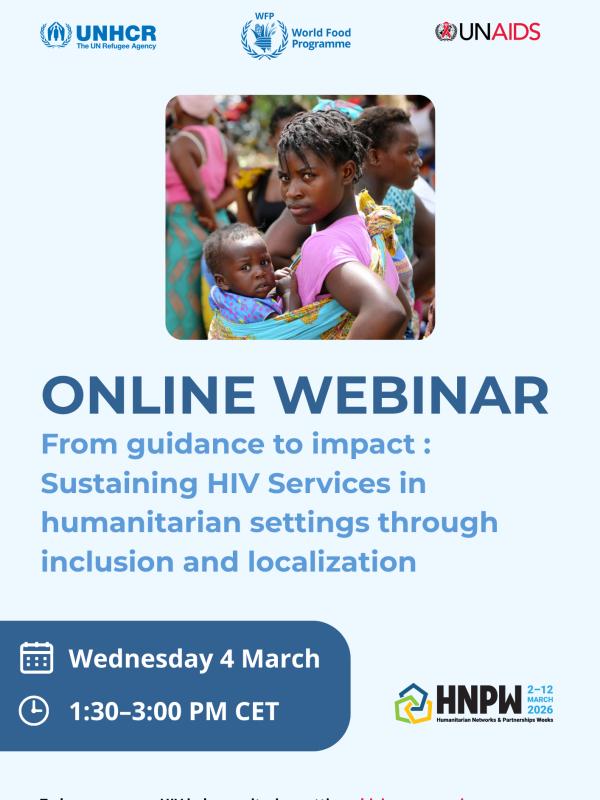
The webinar brought together humanitarian actors, technical experts, and community leaders to confront a stark reality: as humanitarian needs surge and funding declines, the space for essential HIV services is rapidly narrowing. The session explored the critical interface between HIV and humanitarian emergencies, introduced key updates on the revision of the IASC Guidelines for Addressing HIV in Humanitarian Settings, and featured a panel with speakers from MSF, FHI 360, 100% Life Ukraine and Young Positive South Sudan sharing concrete approaches for safeguarding, sustaining and expanding HIV services in the harshest conditions despite shrinking resources.
Continue reading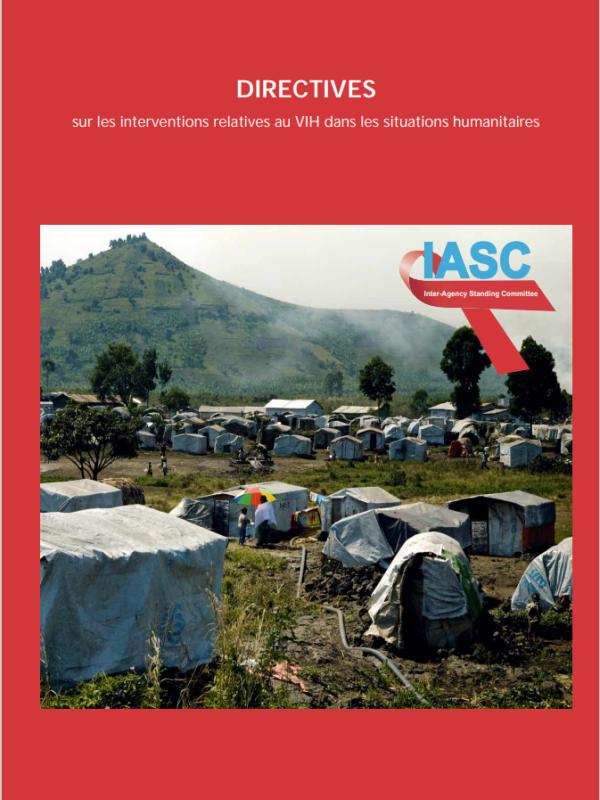
Orientations et principes relatifs à la prévention, au traitement, aux soins et au soutien des populations affectées par le VIH/sida dans les situations d’urgence et de crise. Inclut des informations sur : ▪ La préparation aux situations d’urgence ▪ La réponse initiale minimale – interventions de base en matière de VIH applicables dès les premières phases de toute urgence ▪ Réponse élargie – interventions VIH essentielles supplémentaires, adaptées aux contextes locaux au cours des phases ultérieures de la crise
Continue readingThis webinar organized by UNHCR, WFP and UNAIDS during the Humanitarian Networks and Partnerships Week explores the critical interface between HIV and humanitarian emergencies, shares updates on the revision of the IASC Guidelines for Addressing HIV in Humanitarian Settings, and features insights from MSF, FHI 360, 100% Life Ukraine and Young Positive South Sudan. During a panel, these experts highlight concrete ways humanitarian and community‑based organizations are working together to safeguard and expand access to essential HIV services amid complex emergencies.
The global HIV response is at a pivotal moment: while we are closer than ever to ending AIDS as a public health threat, progress is increasingly at risk due to converging crises, volatility, and widening inequalities. The Strategy integrates HIV in humanitarian settings , calling for HIV to be embedded in security, disaster preparedness, and humanitarian response plans, and emphasizing the need to maintain HIV and SRHR services — including for survivors of SGBV — during emergencies. It also underscores the essential role of community‑led organizations, which often sustain access to services when formal systems are disrupted, facilitating uninterrupted access to treatment.
Continue reading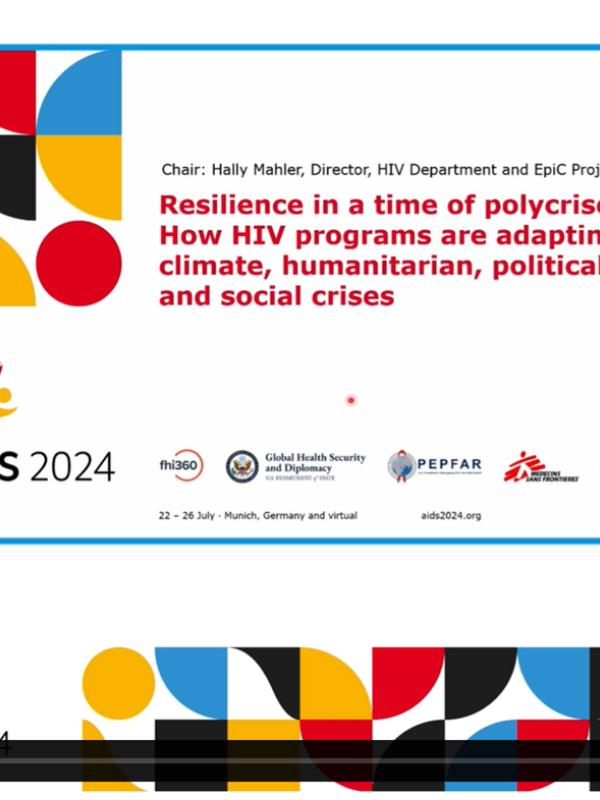
Acute and protracted climatic events, hostile anti-LGBTQI environments, and political and civil unrest threaten to reverse gains in HIV prevention and treatment outcomes and disrupt even the most agile and adaptive HIV services. Synergistically, these multiple crises - or polycrises - create barriers to HIV and other lifesaving services that are in greater demand as HIV risk, trauma, violence, and other economic and social stressors are exacerbated. This session will explore the HIV response in the context of polycrises and highlight actions that actors are taking to promote preparedness and mitigate negative impacts. Speakers will share how HIV programmes have adapted to ensure continuity of HIV prevention, care and treatment in addition to other critical services to vulnerable groups; gaps that persist; and ways forward. The session will conclude with a call to action for donors, policy makers, implementers and communities. The session was organized by FHI 360, Médecins Sans Frontières (MSF), World Health Organization (WHO), U.S. Department of State Bureau of Global Health Security and Diplomacy (GHSD) during the International AIDS Conference 2024.
Continue reading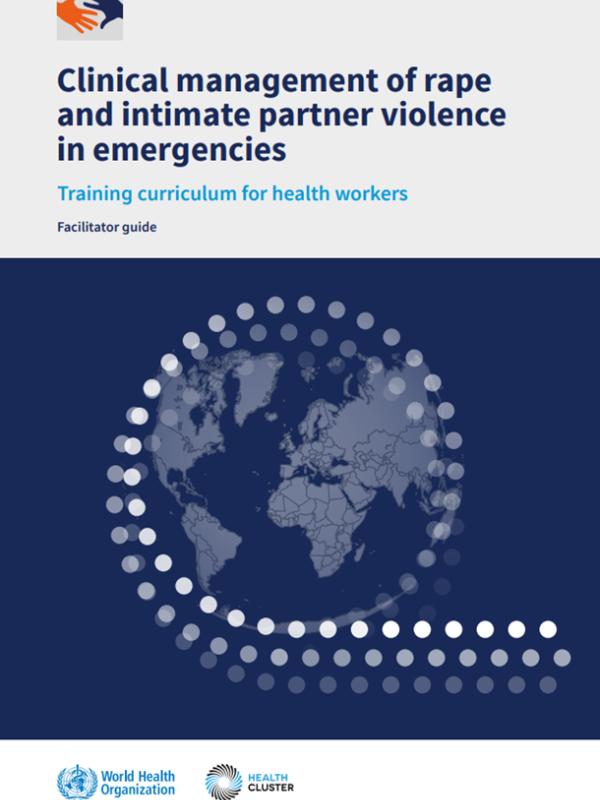
The Clinical Management of Rape and Intimate Partner Violence in Emergencies (CMRIPV) training curriculum is an in-person training package designed to equip health workers in humanitarian settings with the competencies to provide survivor-centered care, including clinical management, first-line support using the LIVES approach, and mental health interventions. Based on the 2020 WHO publication Clinical Management of Rape and Intimate Partner Violence Survivors: Developing Protocols for Use in Humanitarian Settings, this curriculum aligns with international standards and includes: - Structured session plans with interactive activities like role plays and case studies - Web Annex A: Facilitator Resources - Web Annex B: Participant Job Aids - Presentation slides for mini lectures
Continue reading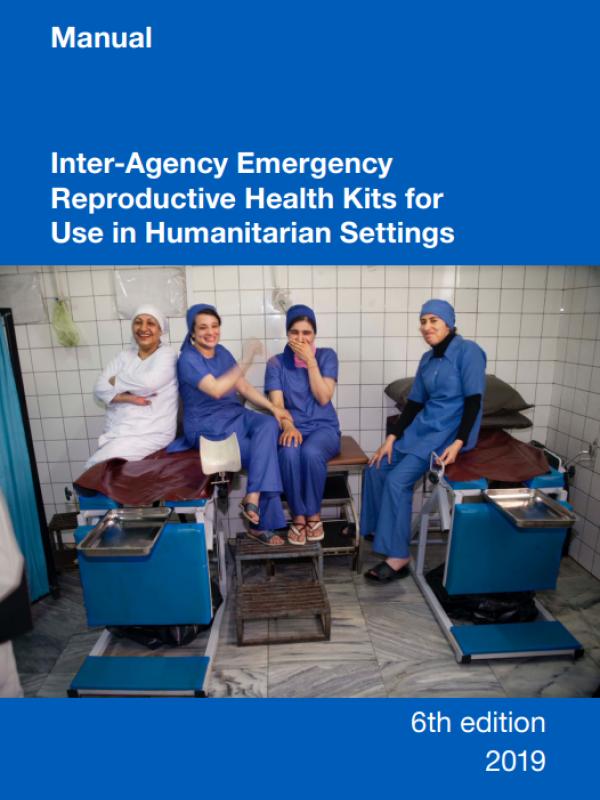
6th edition of the Interagency Emergency Reproductive Health Kits manual which provides information on the kits' contents, use and ordering procedures. These specially designed pre-packaged kits contain the essential medicines and health technologies, equipment and supplies needed to implement the service objectives of the Minimum Initial Service Package (MISP) for sexual and reproductive health in crisis. These include post rape kits, blood transfusion kits, as well as treatment of STIs kits.
Continue reading
Ces directives expliquent les objectifs et le fonctionnement du fonds d'urgence du Fonds mondial qui vise à aider les candidats éligibles à maintenir la fourniture et la continuité des services essentiels de prévention, de dépistage et de traitement du VIH, de la tuberculose et du paludisme dans les situations d'urgence. Les lignes directrices visent à soutenir les pays lorsque le réinvestissement des fonds de subvention existants n'est pas possible ou nécessite un délai de traitement prolongé.
Continue reading
This policy brief highlights the interconnectedness of climate change and global health, emphasizing the urgent need for increased attention, investment, and action at the climate-health nexus. The brief calls for a more systematic approach to addressing the climate-health crisis, including the role of the Joint United Nations Programme on HIV/AIDS (UNAIDS) in supporting countries and communities. It provides an overview of how climate change affects HIV and offers policy directions for governments and specific roles for UNAIDS to enhance the effectiveness of climate and health initiatives.
Continue reading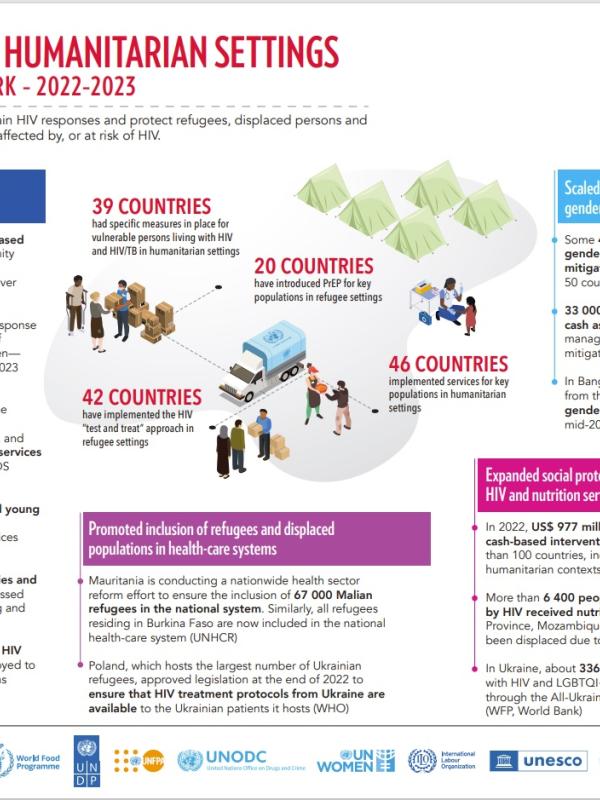
Infographic presenting some 2022-2023 results from the UNAIDS Joint Programme work on HIV in humanitarian settings.
Continue reading